
Speaking at the RSS's annual Vijayadashami rally in Nagpur which was broadcast online and attended 50 swayamsevaks (volunteers) due to the COVID-19 guidelines, Bhagwat said when the Sangh says Hindustan is 'Hindu Rashtra', it does not have any political or power-centered concept in its mind.

Assessing the shape of the Indian economy just a couple of days ahead of the Union Budget for 2016-17, Saugata Bhatacharya, senior vice president and chief economist, Axis Bank, speaks about his budget wishlist and suggests measures that can help finance minister Arun Jaitley achieve the targeted fiscal deficit of 3.5 per cent of India's gross domestic product.
'Obviously, MSP hike raises chances of a reduction in exports. Even without an MSP hike, India's exports of a number of agri-commodities, like sugar, were unviable in the overseas markets.'

Region takes about a third of all Indian fruit shipment and quarter of vegetables sold abroad; consignments from other states could face ban, too, if virus not contained
Supply rises as farmers harvest crops amid fear of spoilage on expectations of early showers

Congress general secretary and chief spokesperson Randeep Surjewala accused the BJP of pushing India into a dark age of religious polarisation to "subserve its parochial political agenda in the short term".
'When you need to revive the economy, when you need to revive aggregate demand, you cut taxes.' 'But what's this government doing?' 'It's increasing taxes for the middle class and the vast majority of the poor on fuel, which has a ratchet effect on most other products.'

The two bills -- Farmer's Produce Trade and Commerce (Promotion and Facilitation) Bill, 2020, and the Farmers (Empowerment and Protection) Agreement of Price Assurance and Farm Services Bill, 2020 -- were passed by Lok Sabha on Thursday.
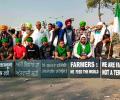
'Had these three farm laws existed it would have become a huge election issue.'

Since a Supreme Court-appointed panel on farm laws is likely to hold its first meeting on January 19, the meeting on Friday between with the government and the unions may be the last one.

Industry players believe the new DFI model will be initially risk capital, which will then be used to mobilise additional resources from development agencies such as World Bank.

The Sena leader said the protesters are India's own farmers and the government should have a dialogue with them.

In the run-up to the polls, a survey has revealed that better employment opportunities is the single most important issue for citizens and that the government has fared below average in this aspect.

Recent data from market analytics firm Nielsen shows that the rural market in the country's 630,000-odd villages is pulling down the overall FMCG business.
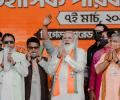
The prime minister says he will bring real change to Bengal. Perhaps he will. The interesting thing is that his party has never defined what this change is, observes Aakar Patel.
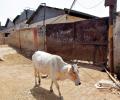
Hordes of cows rampage through the fields, eating everything in sight. This is after the UP government banned slaughter of cattle. As a result, farmers whose cows become old and are a liability simply sets them loose.

According to the police, Delhi-Ghazipur border remains closed for traffic due to the farmers' protests. The commuters are suggested to take alternate routes via Anad Vihar, Chilla, DND, Apsara, bhopra and Loni borders, it added.

Sources said China was forcefully pushing for inking the deal during the RCEP summit later in the day, which was seen as an attempt to counter-balance the impact of its lingering trade war with the US as well as to project the region's economic might to the West.

The development came a day after the protesting farmers rejected the Centre's offer to start talks as soon as they move to Burari and continued to stay put Singhu and Tikri borders of the national capital.
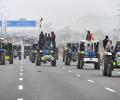
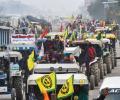
Farmers started the tractor march around 11 am and moved towards Kundli-Manesar-Palwal Expressway amid heavy deployment of Delhi Police and Haryana Police personnel.

In yet another setback to it, the National Spot Exchange Ltd on Monday saw non-executive chairman Shankarlal Guru and another director quit, blaming 'bad people' in the management team for the crisis at NSEL.
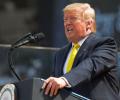
Addressing the 'Namaste Trump' event at the Motera Stadium in Ahmedabad, Trump said that both the countries are in the early stages of discussion for an 'incredible' trade agreement to reduce barriers of investments.
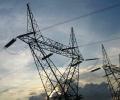
From Jammu and Kashmir to Andhra Pradesh, consumers are facing power cuts ranging from 2 hours to 8 hours.

Trump had said a comprehensive trade agreement with India would take much longer to finalise than earlier expected.

About one-third of the world's poor live in India but there are countries where 88 per cent of population is extremely poor.

Prime Minister Narendra Modi on Friday said the Centre has transferred around Rs 1,35,000 crore so far under the Pradhan Mantri Kisan Samman Nidhi (PM-KISAN) scheme with the payment of eighth instalment on Friday and is also procuring higher quantity of paddy and wheat at minimum support price to boost farmers' income.

Addressing a press conference at Singhu Border in New Delhi, farmer leader Balbeer Singh Rajewal said that farmers never demanded the Supreme Court form a committee to resolve the impasse, alleging the central government was behind this development.

But we have enough stacked up for another 2-3 months. We have come prepared for a long haul, Gurjaint Singh from Panipat said.

Developers grappling with labour shortage and getting construction material to sites could be among a list of problems.
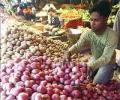
The country has produced a record harvest, but many farmers in the onion bowl of Maharashtra have lost a large share of their crop damaged in storage, adding to the country's inflation woes.

Farm loan waivers should not be regarded as expenditure but as incentive and investment, argues B S Raghavan, the distinguished civil servant.

Modi government is pushing GM food crops without adequate safety assessment and transparency, claim activists.
Robust procurement of paddy and wheat since 2017 and prompt payment to farmers have helped the UP government cultivate a positive and pro-farmer perception, defusing possible farm face-off situations.
The wholesale price index inflation is projected at 6.4 per cent for 2017-18.

Deep down, Katragadda is still that boy who makes as well as sells soap
Housing Development Finance Corp (HDFC) chairman Deepak Parekh on Tuesday said that while the country's macroeconomic fundamentals remain strong and the recovery is in progress, the unpredictability of coronavirus will remain a key challenge. Owing to the second wave, the Indian economy is likely to mirror a similar trend seen in FY21, where the first half of the financial year is weaker and the second half is significantly stronger, he said. "I remain confident that India's macroeconomic fundamentals are strong. Recovery is underway," Parekh said while addressing the 44th annual general meeting of HDFC Ltd. He said, the country's forex reserves and foreign direct investment inflows have scaled record highs, the capital markets are also buoyant and agriculture growth is expected to remain strong with food grain production estimated at over 305 million tonnes.
The agriculture sector has witnessed feeble growth on account of drought for two successive years

The Union home ministry's notification giving effect to the Government of National Capital Territory of Delhi (Amendment) Act, 2021 came on Tuesday night, as the city battles a ferocious COVID-19 wave and its healthcare system is stretched to breaking point.
Fitch Ratings on Thursday said the resurgence of COVID-19 infections may delay India's economic recovery, but won't derail it, as it kept the sovereign rating unchanged at 'BBB-' with a negative outlook. It projected a 12.8 per cent recovery in GDP in the fiscal year ending March 2022 (FY22), moderating to 5.8 per cent in FY23, from an estimated contraction of 7.5 per cent in 2020-21. Fitch had in June last year revised outlook for India to 'negative' from 'stable' on grounds that the coronavirus pandemic had significantly weakened the country's growth outlook and exposed the challenges associated with a high public debt burden.
For the entire UPA regime, from 2005-06 to 2013-14, the average annual farm growth according to the GDP back series data is 3.8 per cent, which too is higher than the first four years of the NDA, though these two periods aren't comparable because one spans nine years and the other four.
